Best Mop for Tile Floors: What Works on Tile and Grout
Ask five importers what the best mop for tile floors is and you will get five answers, usually the one already in their catalogue. Tile is a specific surface, though, and the mop for tile floors that sells in a humid coastal market is not always the one that moves in a dusty inland one. Tile is hard and usually glazed, with a web of grout lines cut through it, and those joints are where the cleaning argument actually happens. Tile covers ceramic, porcelain, quarry and stone products, and grout is the cement-based filler bedded between them. A mop that skims across the tile and skips the grout leaves half the floor dirty.
This guide is written for people choosing what to stock, not for someone cleaning one bathroom. It covers which head materials suit tile and grout, why wringing control decides whether a mop gets returned, and what a sensible range looks like on a shelf. Product details come from the Mopglo range made by CHUANGJIE in Yiwu. Facts about tile, grout and fibre are general and linked where they matter.
Tile is easy. Grout is the hard part.
Glazed ceramic and porcelain are close to non-porous, so liquid sits on the face and a single pass lifts it. Unglazed quarry tile and some natural stone behave nothing like that. They grip water and soil the moment you leave them wet.
Grout is the opposite of both. Cement-based grout is porous, so it wicks dirty water sideways into the joint and dries slowly. That is why a floor can look clean at six in the evening and grey by nine the next morning. Epoxy grout is far less absorbent, but most of the world's tile floors are not epoxy.
Two things follow for a mop spec. The head needs enough water in it to flush the joint, and the user needs to be able to pull most of that water back out before the head touches the floor. A sopping mop does not clean grout. It refills it.
Dry pickup matters too. Grit on tile acts like sandpaper under a flat pad, and a scratch on polished porcelain never comes out. Buyers who only stock a bucket mop are handing the dust sale to someone else.
Which head material suits tile, and which one suits grout
Four head materials cover most of what tile floors need. They are not interchangeable, and they should not be priced as though they were.
| Head material | Where it wins on tile | Wringing method | Check before you stock |
|---|---|---|---|
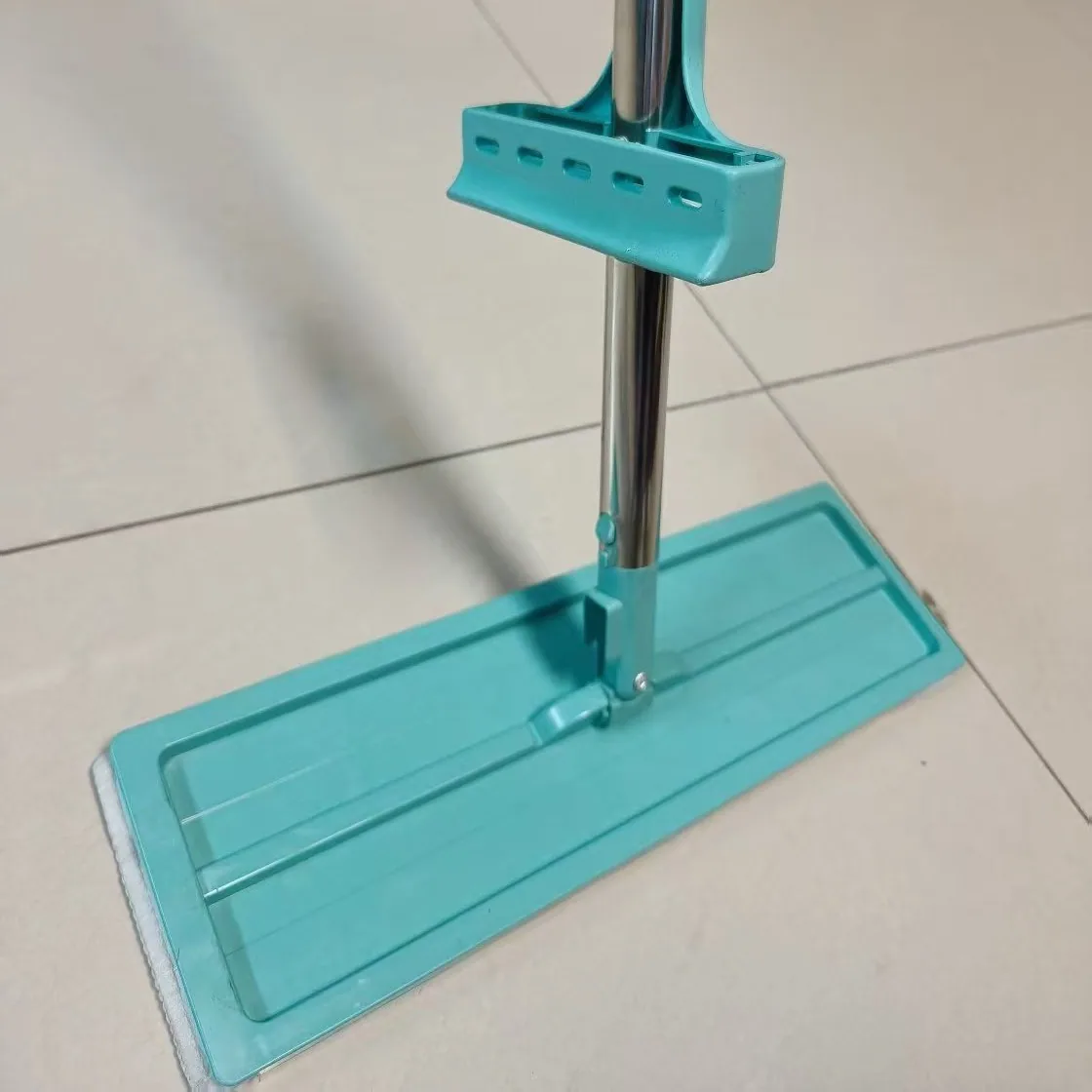
| 80/20 polyester-polyamide microfiber flat pad | Glazed ceramic, porcelain, sealed stone; lifts fine dust and the film that cotton pushes around | Flat press, hands-free scraper, or flat bucket | Pad weight and backing quality; is a replacement pad sold separately |
| Chenille microfiber (noodle pile) | Dry dusting, hair and pet dander on big open floors; works into textured tile | Shake out, or machine wash the head | Pile density and how the strands are anchored to the backing |
| PVA sponge | Wet pickup, spills, bathroom tile; leaves a near-squeegee finish | Roller, folding plate, or twist | Sponge density and how the head behaves when it dries out hard |
| 4-ply and 8-ply cotton yarn | Heavy liquid pickup, rough or unglazed tile, contract and commercial work | Side press wringer or bucket | Ply count, laundering life, shrinkage after washing |
Microfiber earns its place on tile because split fibres are fine enough to reach into the surface texture and grab the film a string mop only moves. Microfiber is measured in fractions of a denier, and the split types used for cleaning trap dust and grease rather than simply wetting them. Our 80/20 pads sit inside the flat mop range and the wider microfiber and cotton line at microfiber and cotton mops.
Chenille is the sleeper for tile. Deep open pile grabs hair and grit instead of dragging it into the corners, so it sells hard in markets with pets. The Chenille Mop is the small-format version and the Large Chenille Flat Mop with Stainless Steel Rod (MOQ 500 pcs) covers aisles and showrooms. Neither is a wet tool. Stock them as dry tools and say so on the shelf.
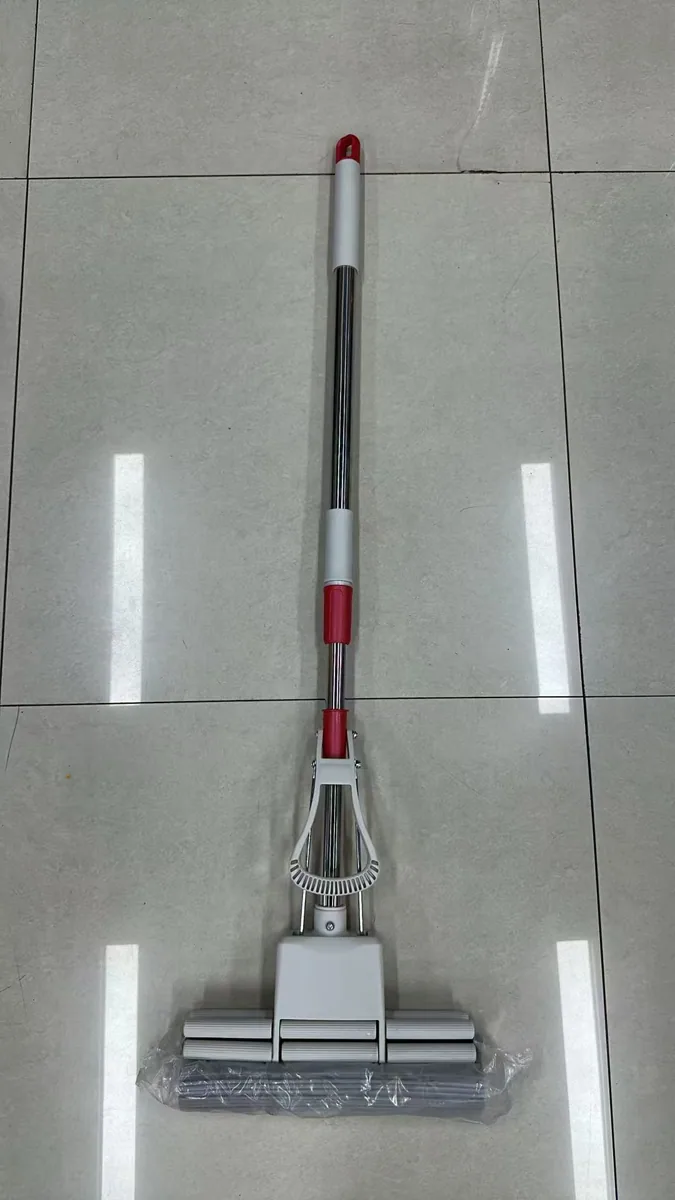
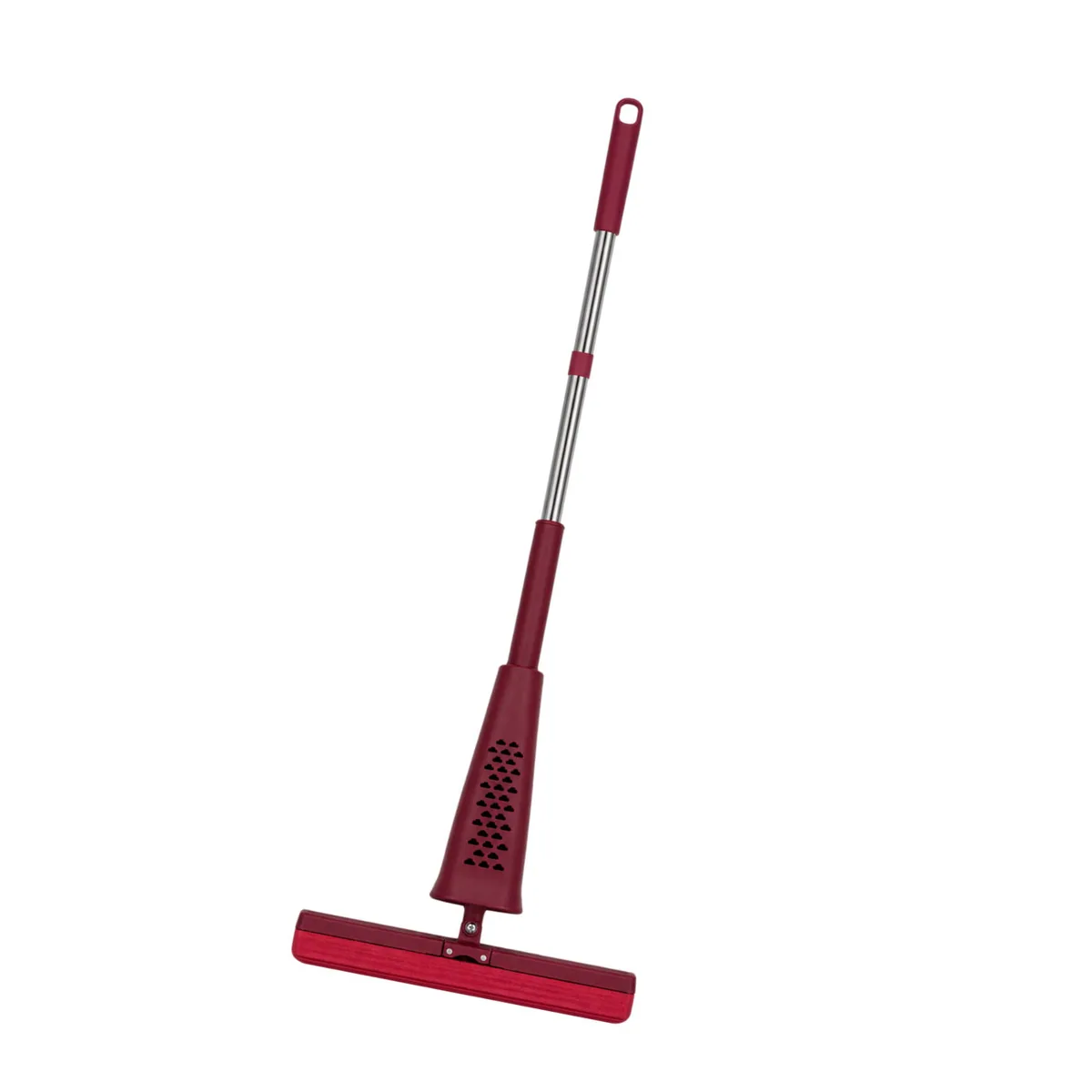
PVA sponge is the right recommendation for bathroom tile and for households that mostly deal with spills. It comes back to a firm, almost dry finish, which is exactly what a wet room needs. The range lives at sponge mops, and a straightforward starting point is the Wide PVA Sponge Roller Mop with Stainless Steel Handle at MOQ 200 pcs.
Cotton yarn still wins on rough, unglazed tile and in contract cleaning. A looped-end head outlasts a cut-end head by a wide margin when it is laundered, and laundered heads are what commercial buyers actually do.
Wringing control is the spec buyers underestimate
Every mop on a tile floor is a water management tool first. Too wet and the grout stays damp and streaks the glaze. Too dry and nothing lifts.
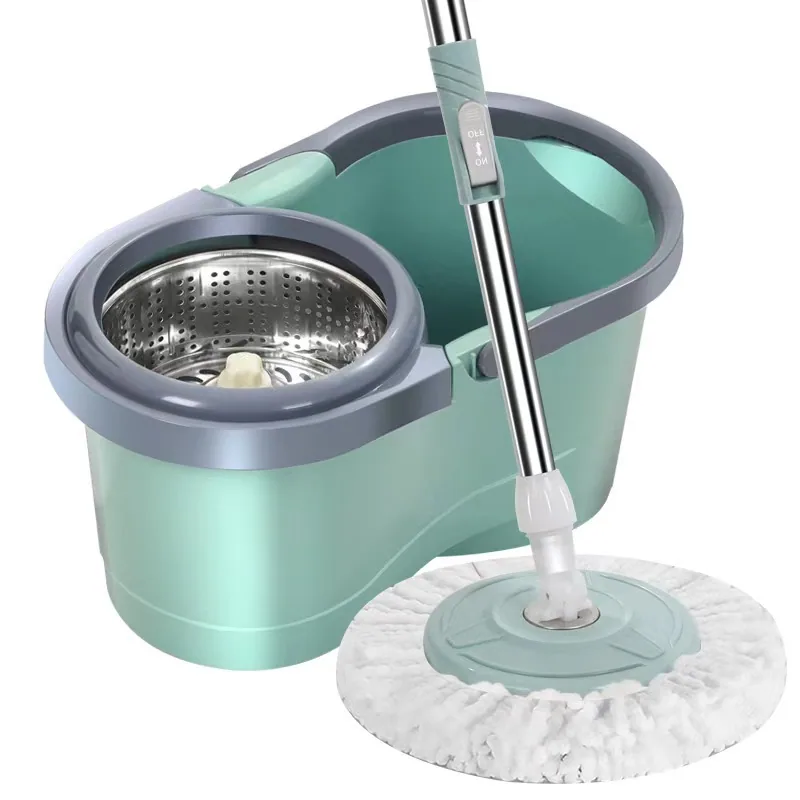
Spin buckets at spin mops are the easiest demo on any shelf: push the pole, the basket spins, the dirty water goes back where it came from. Look at how dry the pad actually ends up. A basket that leaves the head dripping gets returned, and the customer blames the mop rather than their own technique. Blunt opinion: a spin bucket that leaves water on a glazed floor is worse than no bucket at all.
Hands-free flat mops drop the bucket entirely. A sliding sleeve drives a scraper down the pad and the dirty water runs off the head, which suits small apartments where a bucket is one more thing to store. The Hands-Free Mop and the Picasso Hands-Free Mop both work this way, and the moulded frame and anodized handle are what you are really buying.
Roller and folding PVA mops give the most precise moisture control of any manual tool. That is why professional cleaners keep them for tile and vinyl. The Foldable Self-Wringing PVA Sponge Mop (MOQ 500 pcs) folds the plate in half to press the sponge, and the Triangle Self-Wringing Mop folds from three corners, which is a neat answer for tight corners and stair edges.
For big floors, a twin-chamber flat bucket solves the problem mop buckets usually create: clean water in one side, dirty water in the other. Look for it in the general mop category of your own catalogue before you assume one bucket model covers the whole shelf.
Match the mop to the room, not just the floor
Bathrooms and wet rooms
Small tile, tight grout spacing, plenty of splashing. PVA sponge or a compact flat mop. A full spin bucket is oversized here and shoppers know it.
Kitchens
Glazed tile with grease film. Microfiber flat pads with a spray function work well, and a spray mop removes the bucket from a room with no floor space for one. Our PP Spray Mop for Wet and Dry Floors (MOQ 300 pcs) is built for exactly that job.
Textured and unglazed tile
Grout lines sit deeper and the surface holds soil. Cotton yarn or a chenille head used damp will outperform a smooth flat pad, which just skates over the peaks.
Open commercial floors
Dust first, then wet. Skip the dusting step and you are making a mud paste on the tile. Sell the dry tool and the wet tool together, not one instead of the other.
What mix should a retailer actually stock?
Tile is the most common hard floor in most of the markets we ship to, so a tile-focused mop shelf should be broad rather than deep. Five positions, plus refills:
- One spin mop set. The volume seller and the demo unit. Our Stainless Steel Dual-Drive Spin Mop Bucket carries an MOQ of 200 pcs.
- One flat mop with a bucket or hands-free wringer. Higher perceived quality, better margin, works on narrow grout lines.
- One PVA sponge mop. Cheap to make, easy to understand, strong in bathroom-led markets. A Sponge Mop Head refill keeps the customer coming back to your brand rather than a competitor's.
- One chenille or cotton dry tool. Different job, same aisle, and it lifts average basket value.
- Replacement heads. The category nobody wants to plan and everybody reorders. The mop heads page is where a private label range starts to look like a system rather than a one-off.
Refills deserve a blunt comment. A mop range with no refill line is a range that sells once. Head availability is also the first question a serious chain buyer asks, so have the answer ready in your pitch, not in an email three weeks later.
Specs worth writing into the purchase order
- Handle wall thickness. Our reinforced stainless steel and aluminium handles run 0.4 to 0.6 mm, which is the difference between a pole that flexes and one that folds.
- Drop test. Products must pass a drop test before leaving the factory. Ask for that in writing, not as a verbal nod.
- Head attachment. Clip, hook-and-loop or screw thread, plus whether the replacement pad is a stock item or a special.
- Packaging language and carton marks for your market, and whether the pad counts as one unit or a spare in the pack.
- Colour. Pantone matching or a physical colour sample, confirmed before mass production.
- Material option. PCR plastic parts and recycled cotton fibre are available if your buyers ask for them. We do not quote carbon figures, because we do not have verified ones.
One more practical point for tile-specific listings. Photograph the mop on tile, with grout visible, not on a wooden studio floor. Shoppers searching for a tile mop are looking for evidence that it copes with joints.
How to start an order with us
CHUANGJIE has been making household cleaning tools in Yiwu since 2006, with a showroom of more than 200 square metres in District 4 of the International Trade Mart and a range of 3,000+ SKUs. Mopglo is our product brand, and tile mops sit at the centre of it.
Two routes. Pick stock items from the range and order at the minimum shown on each listing, which varies by item. Or go OEM: 2,000 to 8,000 pieces per style per colour, with colours matched to Pantone codes or your samples, logos by embroidery, silk print or heat print, and head material, bristle stiffness or handle length adjusted for your market. A pre-production sample is confirmed before mass production, and every order runs through production scheduling, quality inspection, consolidation in Yiwu, customs clearance and shipment, FCL or LCL.
Email mopglohome@gmail.com with the item, quantity and destination port, or send it through the quote form on our contact page. If you are still shaping the range, the OEM and ODM page explains how customisation works from sample to shipment.
FAQ
Which mop type is best for cleaning tile grout?
Grout is porous, so the head has to release water into the joint and then take it back out. A microfiber flat pad with a press or scraper wringer handles glazed tile well, while a cotton or chenille head used slightly damp works better on deep or textured grout lines. The wringing control matters more than the head alone: a dripping mop refills the grout instead of cleaning it.
Is a spin mop suitable for ceramic tile?
Yes, and it is usually the easiest set to demonstrate in store. Check how dry the spin basket leaves the head, because water left on a glazed surface streaks and takes longer to dry out of the joints. Spin mop sets are in our range, including models with MOQ from 200 pcs.
What is the minimum order for a private label tile mop?
OEM orders run 2,000 to 8,000 pieces per style per colour, depending on the model and the level of customisation. Stock items each carry their own minimum on the product listing. Colour matching to Pantone codes and a pre-production sample are part of the flow.
Can the mop head material be changed for my market?
Yes. Head material, handle length and bristle stiffness can be adjusted, and the head options include PVA sponge, chenille microfiber, 4-ply and 8-ply cotton yarn, and 80/20 polyester-polyamide microfiber pads. PCR plastic parts and recycled cotton fibre are also available. Email mopglohome@gmail.com with the market you are selling into.