Microfiber Mop Pads: Materials, Sizes and Refill Planning
Microfiber mop pads look like a commodity until you try to build a refill line around them. Split one open, weigh it, wash it a dozen times, and the differences between a pad that sells once and one that brings the shopper back become obvious. This guide covers the mop pad material, the sizes, the fittings and the refill planning that matter when you source microfiber mop pads and microfiber mop refills for a supermarket chain, a hardware distributor or your own private label.
What microfiber actually is
Microfiber means a synthetic fibre finer than one denier, and that fineness is the whole point. Wikipedia's entry on microfiber defines it that way, and the key effect is surface area: a bundle of very fine filaments gives you far more contact per gram than ordinary yarn. Many microfiber fabrics are made from split filaments, and the fine edges that creates are part of why a good pad traps dust and grease rather than smearing them across the tile.
Two polymers do most of the work. Polyester brings strength, abrasion resistance and a low fibre cost. Polyamide, usually nylon, takes up water better and keeps its resilience when wet. Nearly every mop pad on the market blends the two, and the ratio is the first thing a serious buyer should ask about.
Why 80/20 polyester-polyamide is the default pad spec
Eighty percent polyester, twenty percent polyamide is the ratio most pad factories settle on, and it is a decent compromise. The polyester carries the wear. The polyamide carries the water. Push the polyamide higher and the pad feels softer and wrings drier, but it costs more and may wear faster in a rough laundry cycle. Push it lower and you get a pad that feels thin, releases water poorly and looks tired after a few months on a shelf.
An all-polyester pad can look identical in the pack. It will not clean the same way. If a quote looks too good, ask for the fibre composition in writing and check the pad weight, because grams per square metre is where cheap pads hide. That one number tells you more about mop pad material than any photo.
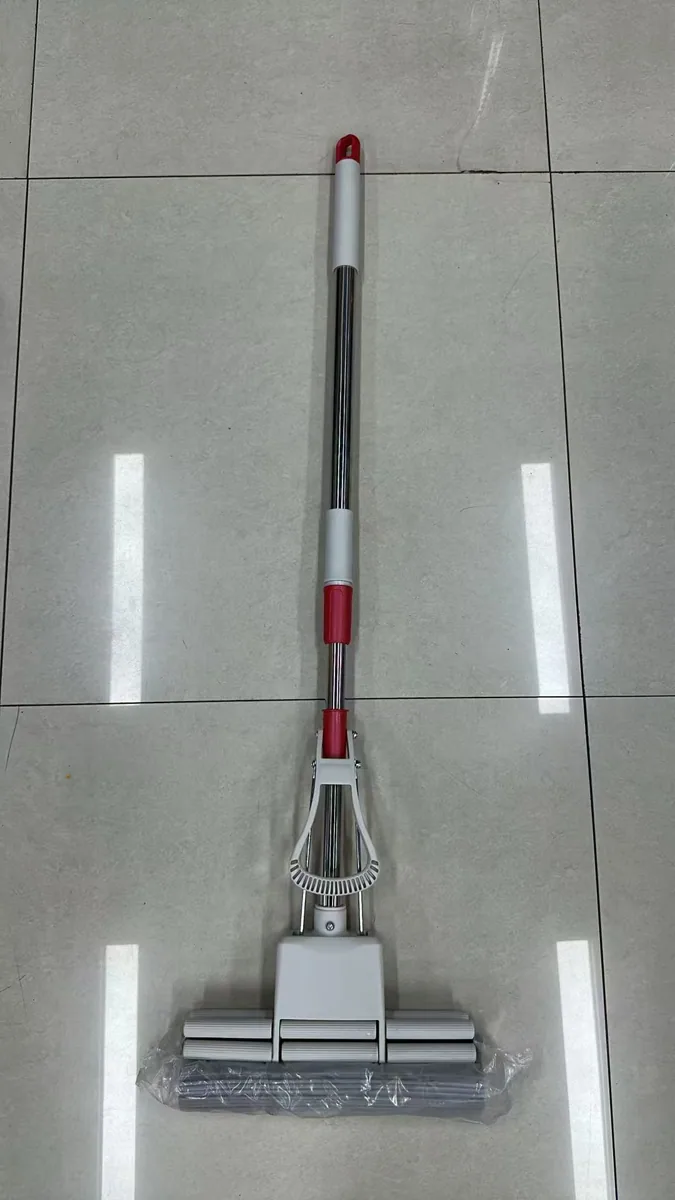
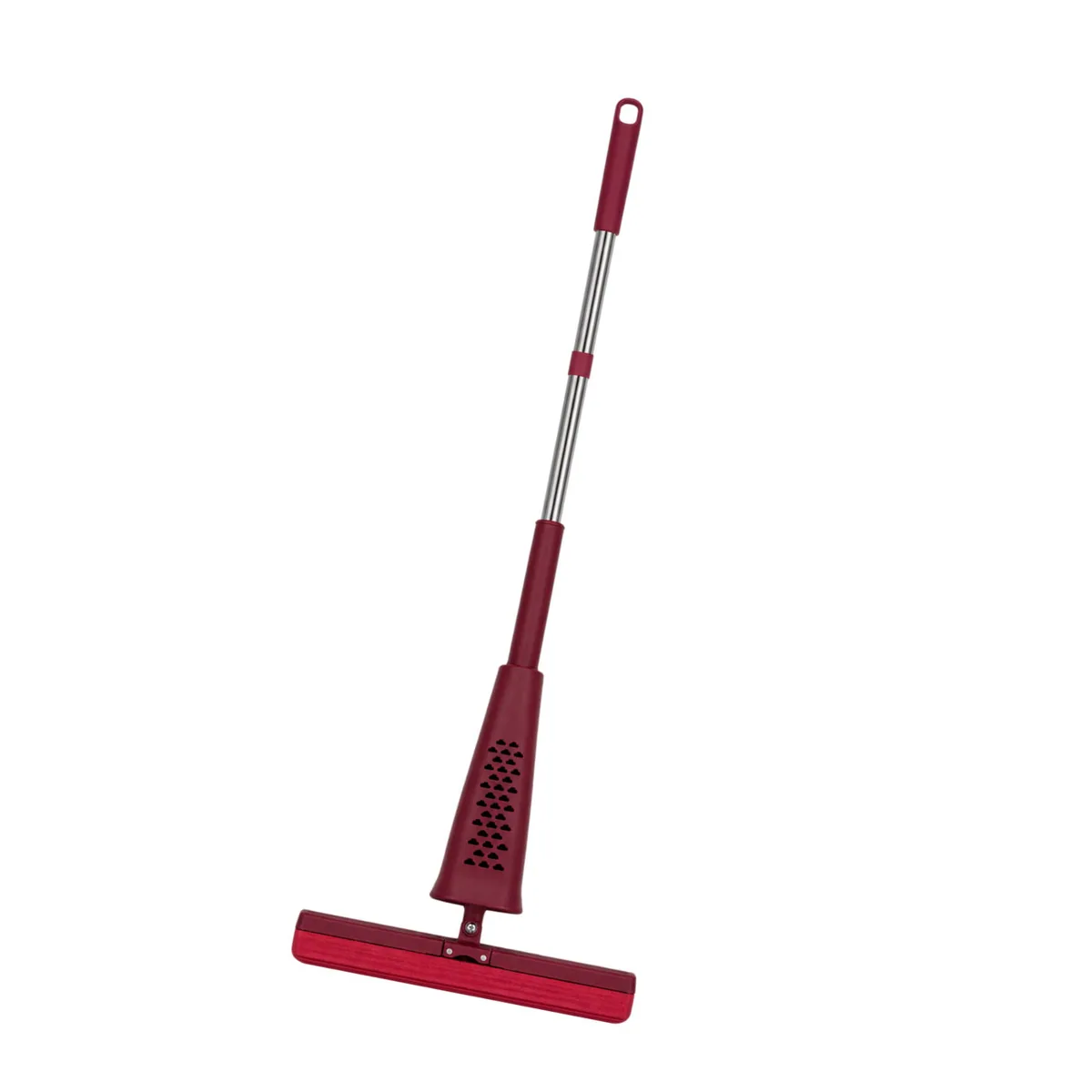
Our own range covers PVA sponge, chenille microfiber, 4-ply and 8-ply cotton yarn and 80/20 polyester-polyamide pads, so a buyer can match a pad to a frame they already stock. Start with the mop heads category if you are sourcing refills on their own.
Chenille microfiber vs flat microfiber
Both are microfiber. They behave like different products.
Chenille takes its name from the French for caterpillar, and the fabric is built as a pile yarn twisted between two tightly twisted yarns, which leaves a soft, tufted surface (Chenille fabric, Wikipedia). On a mop head that pile traps hair and grit when dry and holds a serious amount of water when wet. Flat microfiber is a denser, shorter-surfaced fabric, often bonded to foam or sponge, and it shines on smooth floors where you want even contact rather than a shaggy surface.
| What to compare | Chenille microfiber pad | Flat microfiber pad |
|---|---|---|
| Surface | Open, tufted pile with visible strands | Dense and flat, often laminated to foam |
| Dry dust and hair | Strong, the pile grabs and holds | Good on fine dust, weaker on long hair |
| Wet pickup | High, holds plenty of water | Moderate, spreads water evenly |
| Wringing and drying | Slower to dry, needs airflow | Dries faster, wrings out flat |
| Best floor types | Tile, stone, concrete, pet households | Laminate, vinyl, sealed wood, smooth tile |
| Laundry life | Pile can mat if washed hot | Edge binding usually fails first |
| Retail story | Easy to demo, looks like it does more | Stacks flat, packs flat, cheap to ship |
| Watch out for | Thin pile sold as chenille | Foam core that crumbles after washing |
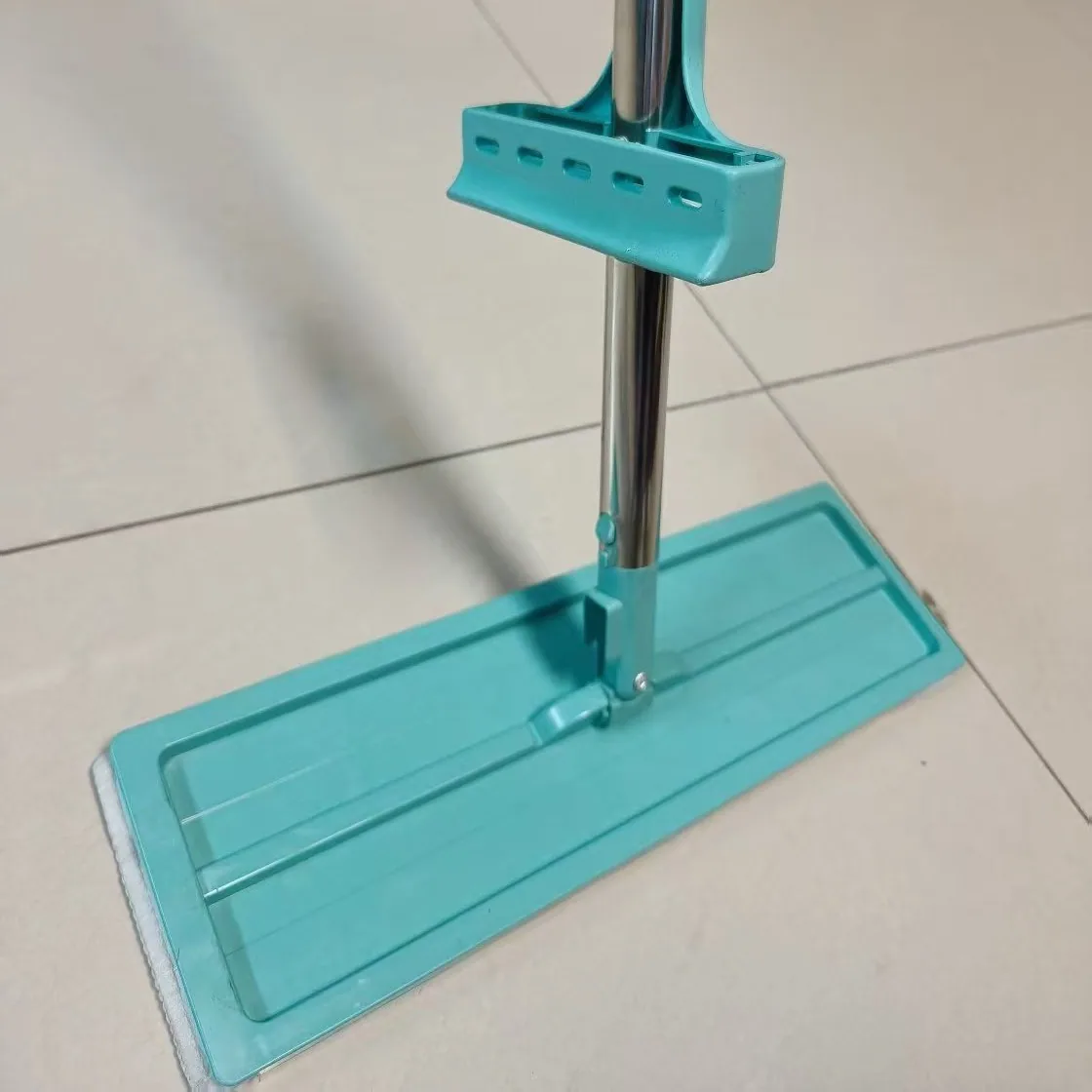
Our Chenille Mop and Large Chenille Flat Mop with Stainless Steel Rod both use the pile version, while the pads in our flat mops range use denser microfiber on a tray. Same word on the box, different jobs.
How pads attach: hook-and-loop, clip and pocket
The fitting decides whether a refill is a repeat purchase or a complaint. Three types cover most of the market.
- Hook-and-loop. Tiny hooks on one side, loops on the other, usually hooks moulded into the head plate and loops on the pad backing. Fast to change, easy to sell as a standalone refill, and the first thing to fail if the backing is cheap.
- Clip or tooth. A mechanical jaw grips the pad edges. No proprietary backing, so buyers can use their own cloth, which is great for commercial users and less great for refill revenue. Our Multi-Functional Cloth Clip Mop is built this way.
- Pocket or sleeve. The pad slides over the plate like a pillowcase. Cheap to make, hard to get wrong, but sizing has to be tight or the pad bunches.
Mop designs have multiplied since the flat mop arrived, and the head fitting is where most of that variety sits. Wikipedia's mop article is a reasonable primer on the family tree if you need the background. For sourcing, the rule is simple: pick the fitting your market already uses, then build the refill range around it.
Sizing: measure the plate, not the old pad
Pads are sized to the head plate. Get this wrong and you get returns.
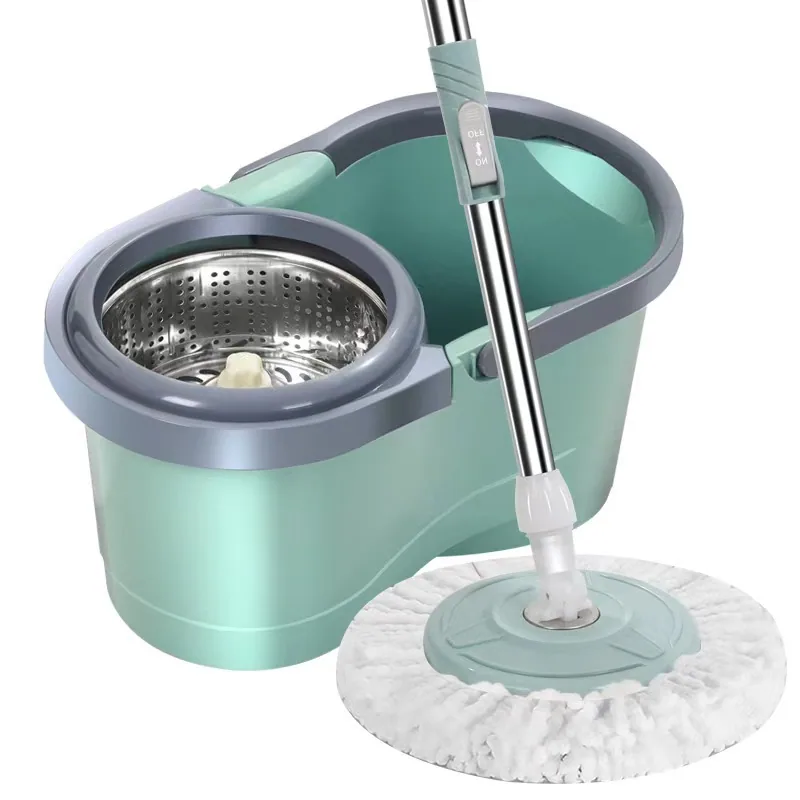
A 35 cm mop needs a 35 cm pad, which is why our 35cm Hand-Wash-Free Flat Mop runs a 35 x 12 cm pad on its tray. Spin mop heads are a different shape again: the Tornado Mop uses a 20 x 20 cm octagonal pad that turns 360 degrees, so a rectangular refill will not sit flat.
Measure the plate, not the pad you are replacing, because the old pad has already been through the wash. Microfiber shrinks, edges curl, and a pad that started at 350 mm can come back at 340 mm. Agree the tolerance in writing with your supplier and check the first production run against a real frame, not a drawing.
Washing, drying and what it does to the pad
A microfiber pad is a wear item, and laundering is what wears it. A few general rules hold for almost any pad you stock.
- Shake out dry dust before washing, or it turns into mud in the drum.
- Wash warm, not hot. High heat relaxes the split fibres and the pad goes flat.
- Skip fabric softener and dryer sheets. They coat the fibres and kill pickup.
- Go easy on chlorine bleach, which attacks polyamide.
- Air dry or tumble low. A hot dryer is hard on edge binding.
Wash care belongs on the pack, printed large enough to read. Buyers notice, and the returns rate drops when they do. Our post on how often to replace a mop head is a useful starting point for the replacement message you put on shelf.
Planning a refill programme for retailers
Refills are the profitable half of a mop line, and most ranges get them wrong by treating them as an afterthought.
Say you sell a 35 cm flat mop and a spin mop set. Each needs its own refill SKU with its own barcode, and the refill should sit next to the mop it fits, not three aisles away in cleaning accessories. If the pad is hook-and-loop, sell a single and a two-pack. If it is chenille, a two-pack is often the better entry because the pile looks generous and demos well. Colour coding by room or by mop type helps staff answer the "will this fit mine" question without opening the pack.
Timing matters too. Dust pads move when the season turns and windows come open; wet pads move with spring cleaning and back to school. A chain that stocks one universal pad for everything usually ends up with the wrong pads on the shelf and a write-off at the end of the season.
| Refill line check | Why it matters |
|---|---|
| One refill SKU per frame | Prevents wrong-fit returns |
| Pad size and fitting printed on pack | Cuts staff time on the shop floor |
| Fibre composition shown | Supports price steps between tiers |
| Single and multipack side by side | Catches trial buyers and stock-up buyers |
| Wash care on the reverse | Fewer complaints, longer pad life |
| Refill shelved with the mop | Impulse purchase at the point of need |
OEM packaging for private label pads
Pads are a good private label entry point because the packaging is simple and the tooling already exists. Our OEM/ODM service covers colours matched to Pantone codes or to a physical sample, logos by embroidery, silk print or heat print, plus colour boxes, hot-stamped logos, carton marks and product labels. Mop head material can be adjusted for a market, so a buyer selling into a hard-water region can specify a different pad build from one selling into soft-water cities.
OEM minimums run 2,000 to 8,000 pieces per style per colour, depending on the item and the packaging. A pre-production sample is confirmed before mass production, which is the point where you find out whether the pad still fits the frame once the backing is stitched on. Our OEM/ODM page sets out the full flow.
Starting an order with us
Zhejiang Chuangjie Commodity Co., Ltd. has been making household cleaning tools in Yiwu since 2006, and the Mopglo range covers mops, mop heads, brushes, rags and the rest of the aisle. We handle mould development and production in house, with more than 300 injection moulding machines and annual output over 5 million units, and we run the export side from order confirmation through inspection, consolidation in Yiwu, customs clearance and shipment.
Two ways in. If a stock item suits you, its minimum order sits on the listing and applies to that item only. If you want your own pad spec, colour and packaging, go the OEM route above. Send your pad dimensions, fitting type, fibre spec and pack format to mopglohome@gmail.com, or use the quote form on our contact page. Our team will come back with options and a pre-production sample before anything goes into mass production.
FAQ
What is the difference between chenille and flat microfiber mop pads?
Chenille has an open, tufted pile that grabs hair and grit when dry and holds a lot of water when wet, so it suits tile, stone and pet households. Flat microfiber is denser and often laminated to foam, so it dries faster and works well on laminate, vinyl and sealed wood. Both are microfiber, but they are different products on the shelf.
What does an 80/20 polyester-polyamide pad actually mean?
It means 80 percent polyester fibre and 20 percent polyamide (nylon) by weight. The polyester carries the abrasion and keeps cost down. The polyamide takes up water and holds shape when wet. Ask any supplier for the composition in writing, and compare pad weight in grams per square metre before you compare price.
Can you make microfiber pads to fit our existing mop frame?
Yes. Mop head material, pad size and pad fitting can be adjusted for a market under our OEM/ODM service, with colours matched to Pantone codes or samples and your logo applied by embroidery, silk print or heat print. OEM minimums are 2,000 to 8,000 pieces per style per colour, and a pre-production sample is confirmed before mass production.
What is the minimum order for stock microfiber mop refills?
Each stock item carries its own minimum order, shown on that item's listing, and it applies to that item only. Tell us which frame or refill you are looking at and we will confirm the figure for it. For a custom pad spec, the OEM minimums apply instead.