Types of Mops: Spin, Flat, Sponge, Spray and String Compared
Most buyers start with a target cost per unit and work backwards. Wrong order. Of all the types of mops on a shelf, the one that comes back as a return is rarely the cheapest one. It is the one that did not match the floor it was sold for. Pick the floor first, then the wringing method, then the price.
Five families cover almost every retail shelf and janitorial catalogue: spin, flat, sponge, spray and string. Each works differently, wrings differently and sells to a different shopper. Here is how they compare, and what to put in a purchase order for each.
Spin mops: the bucket does the wringing
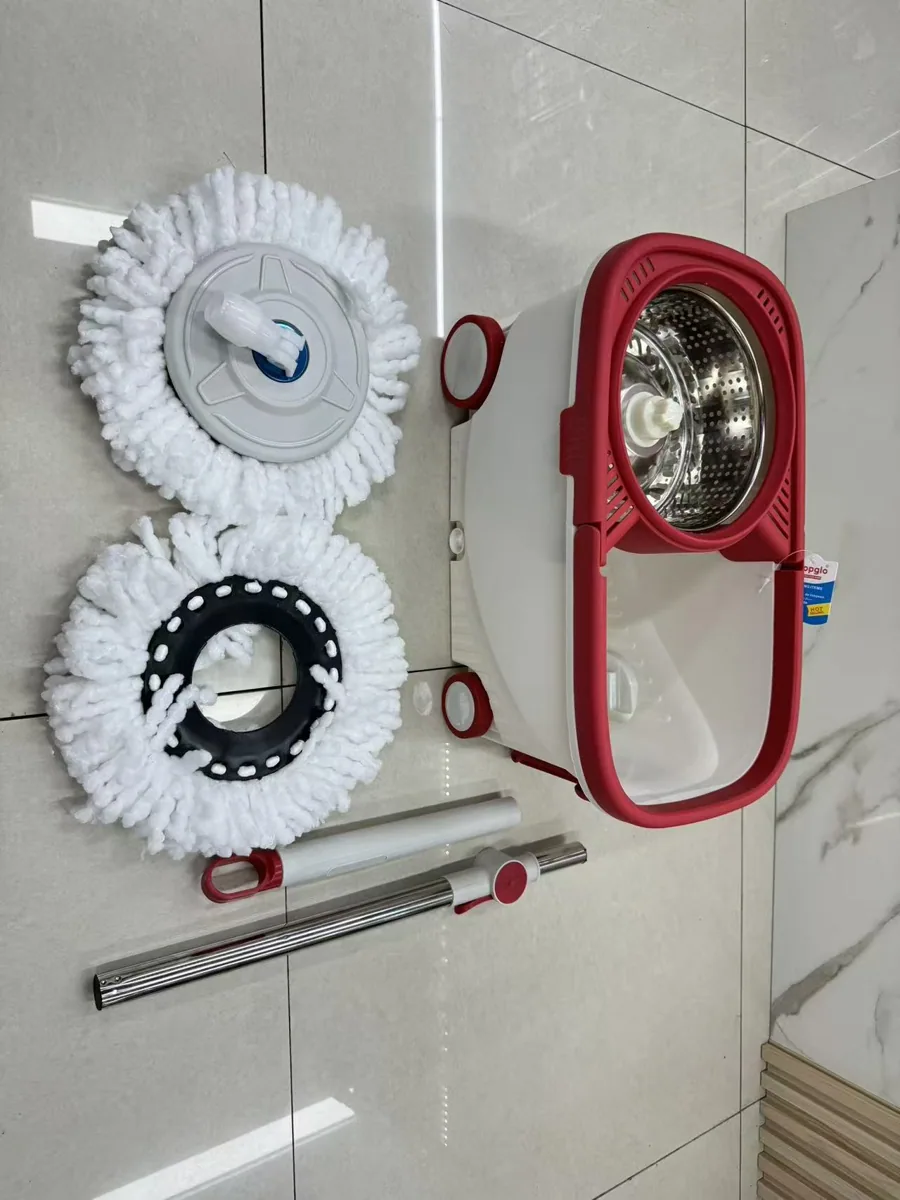
A spin mop sits on a rotating plate inside a basket. Push the handle down, or press a foot pedal, and centrifugal force throws the water out of the pad. Nobody touches the dirty end. That one feature is why the format sells.
Heads are microfiber in most cases, often an 80/20 polyester-polyamide blend, sometimes chenille for dust pickup. Split microfiber filaments trap grit that a cotton yarn pushes around, which is why the format took over household tile cleaning (see Microfiber).
Best floors: ceramic and porcelain tile, stone, sealed vinyl, big open areas. Weak spots: thick carpet, tight corners, and any shopper short of cupboard space. Our spin mops run from a compact all-in-one set to stainless steel dual-drive buckets, with stock minimums from 200 to 400 pieces per item.
Flat mops: low, wide and quick
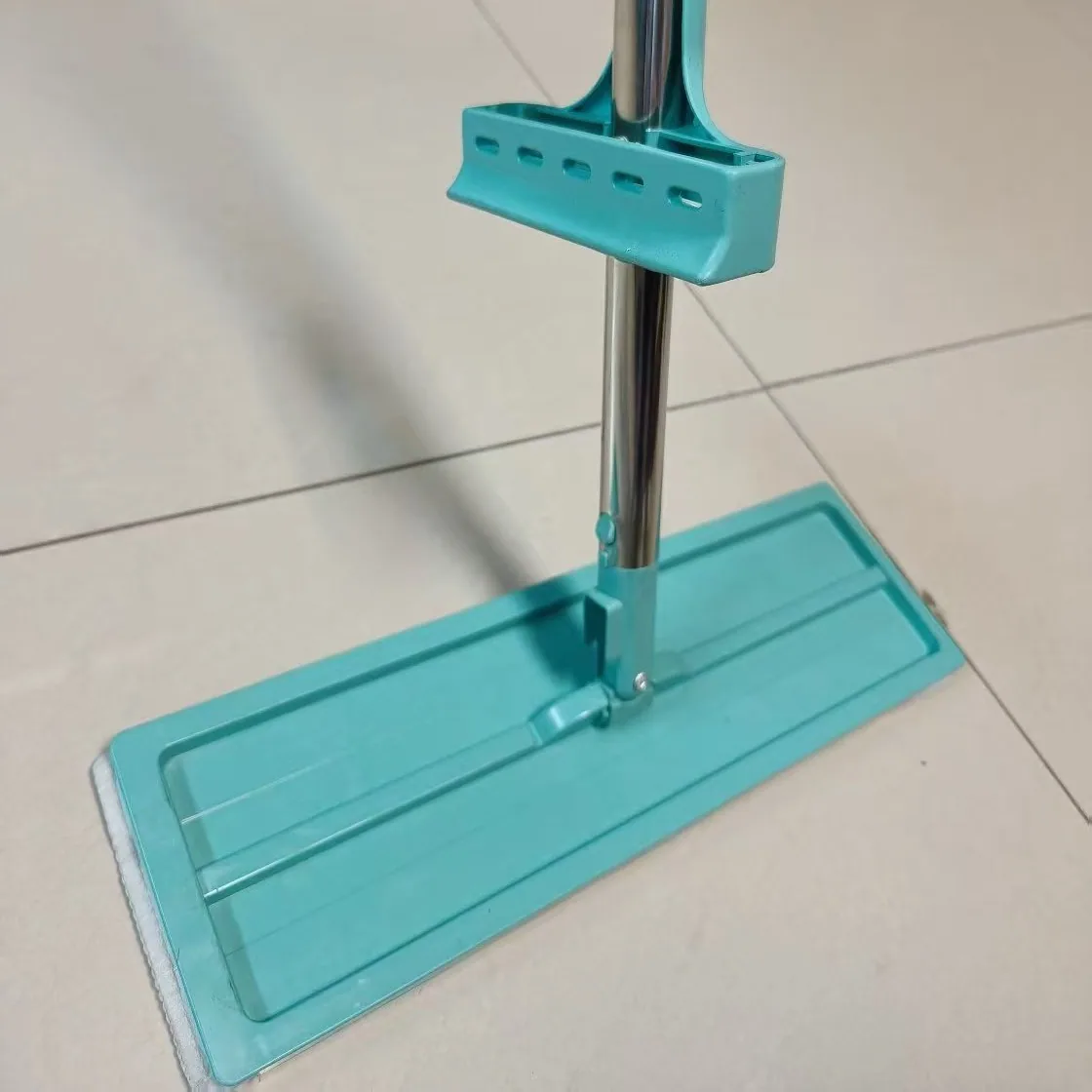
Flat mops trade the basket for a rectangular pad on a swivel head. Wringing happens three ways: a sliding sleeve on the handle drives a scraper down the pad, a two-chamber bucket rinses and squeezes it, or you peel the pad off and wash it in the sink.
The low profile is the whole point. A flat head slides under a sofa, a fridge or a low cabinet where a spin mop with its fat pad simply will not go. Pads are usually microfiber, sometimes chenille for hair and dust, sometimes a clip-on cloth for buyers who refuse proprietary refills.
Best floors: tile, laminate, sealed hardwood, and any room where furniture stays put. Weak spot: heavy spills, because a thin pad holds less water than a sponge. If your market is renters and small apartments, stock flat before anything else. Our flat mops include hands-free scraper models and dual-chamber bucket sets, and the microfiber pad guide covers the pad spec in detail. Still undecided between the two biggest sellers? Read spin mop vs flat mop.
Sponge mops: the PVA specialist
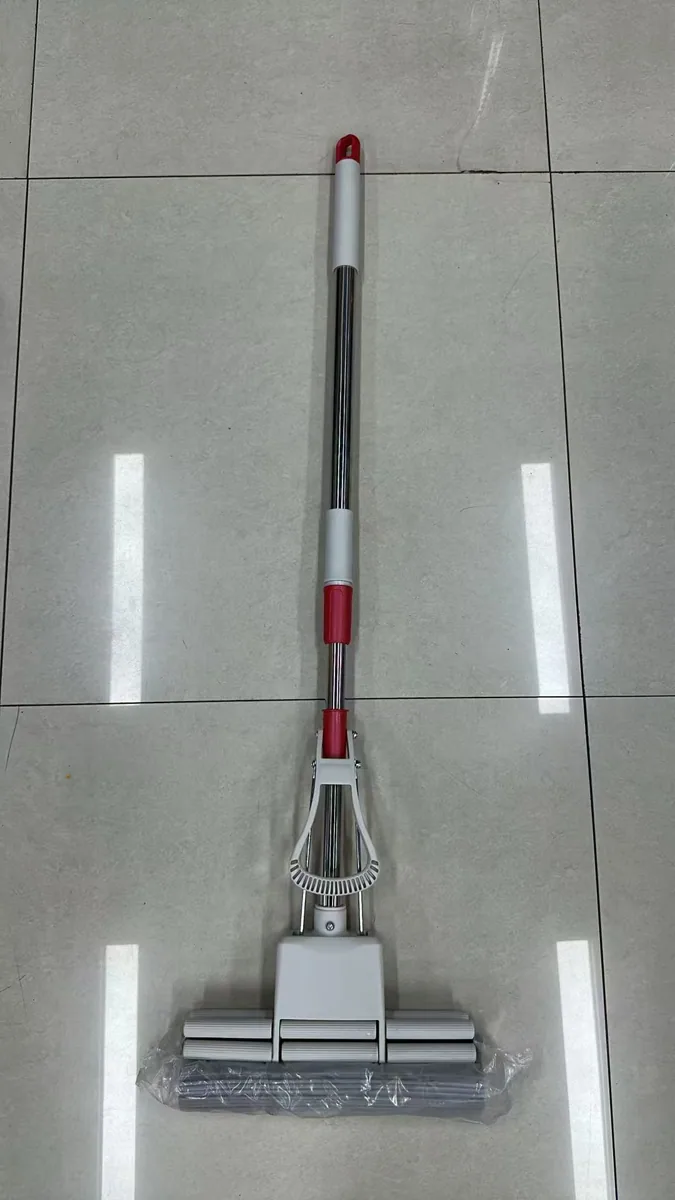
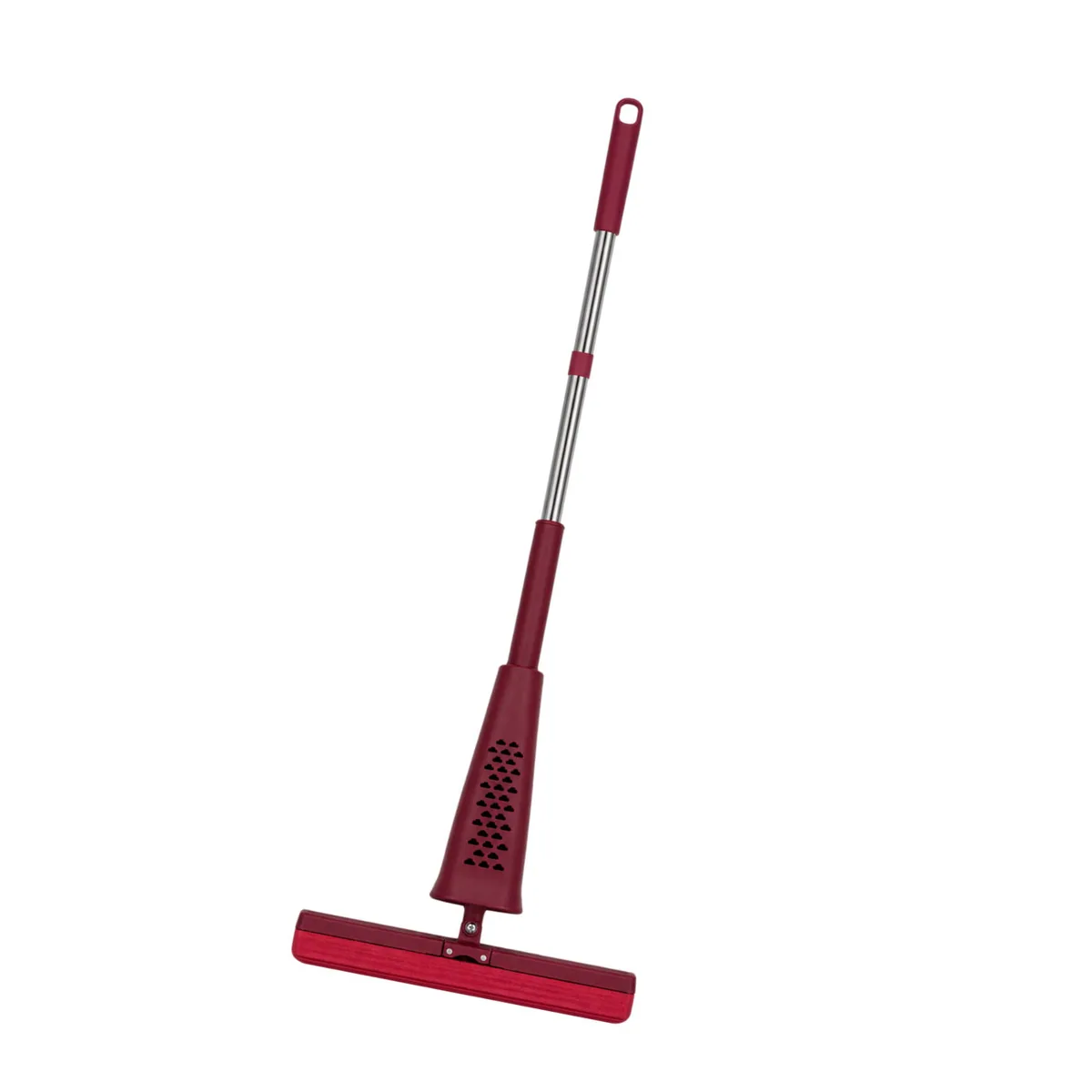
Sponge mops use a PVA head. That is polyvinyl alcohol, a water-soluble polymer processed into a dense sponge with an open cell structure (see Polyvinyl alcohol). Two behaviours matter on the shelf. It takes up water fast. And it goes stiff when dry, then softens within seconds in the bucket.
Wringing is mechanical: a lever rolls the head flat, or a folding plate squeezes it from both sides. No spinning, no pedal, no basket. Fewer parts, lower unit cost, and less to break.
Best floors: bathroom tile, stone, vinyl, anywhere a spill needs soaking up rather than spreading around. This is the mop people buy after a leak, not the one they use on a whole floor every week. Merchandise it near buckets and bathroom cleaners, not next to spray mops.
Refills matter more here than anywhere else. PVA wears at the edge and shoppers replace heads before they replace the handle. Our sponge mops cover triangle self-wringing, folding and roller-wringer models, with spare heads sold from our mop heads range. Replacement cycles vary by use, so we do not quote a fixed lifespan; the head replacement guide explains what to tell shoppers instead.
Spray mops: no bucket, no excuse
A spray mop carries the water in a bottle clipped to the handle. Press a trigger or a button and a fan of mist lands just ahead of the pad. The pad is thin microfiber, either machine washed or replaced.
Best floors: laminate, sealed hardwood, tile in small kitchens and hallways, and any job that is a spot clean rather than a full wash. Water goes only where you need it, and the pad lifts the dust the same pass. That is why the format sells online. Flat pack, no bucket, low freight weight per unit.
Weak spot: dried mud across a whole floor needs more water than a small onboard bottle delivers. Check trigger feel, bottle fit and pad attachment before you commit to a container. Our spray mops include a lightweight push-button model and a PP trigger model with a transparent bottle.
String mops: cotton still earns its shelf
The cotton yarn string mop still owns the janitorial aisle, and for good reason. A looped-end or cut-end head of 4-ply or 8-ply cotton yarn picks up a lot of liquid, survives repeated laundering and has a low cost per square metre cleaned.
Wringing: a side-pressure wringer bucket or a down-press wringer. The downside is obvious. Heavier, wetter, slower, and it needs a proper bucket with a wringer to work at all.
Best floors: concrete, quarry tile, commercial kitchens, workshops, schools, any large hard floor where liquid pickup beats speed. Your buyer here is a contract cleaner or a janitorial distributor, not a home shopper. Our microfiber and cotton mops cover looped-end washable cotton, wide plywood-frame commercial mops and chenille flat dust mops.
Types of mops compared side by side
Read this as a stocking grid, not a ranking. No row wins outright; each one wins on a specific floor.
| Type | Wringing method | Head material | Best floors | Typical buyer |
|---|---|---|---|---|
| Spin | Centrifugal, spin basket driven by handle pump or foot pedal | Microfiber pad, chenille | Tile, stone, sealed vinyl | Households, cleaning companies |
| Flat | Sliding sleeve scraper, dual-chamber bucket, or hand wash | Microfiber, chenille, cotton cloth | Tile, laminate, sealed wood, under furniture | Households, supermarket promo aisles |
| Sponge (PVA) | Roller lever or folding plate | PVA sponge | Bathrooms, stone, vinyl, spills | Households, hardware stores |
| Spray | None, pad is washed or replaced | Microfiber pad | Laminate, sealed wood, quick touch-ups | Apartment dwellers, online sellers |
| String and cotton | Side-pressure wringer bucket or down-press wringer | 4-ply or 8-ply cotton yarn, cotton-poly blend | Concrete, commercial kitchens, workshops | Janitorial distributors, contract cleaners |
What to specify when you order
Most sourcing problems start in the spec sheet, not on the line. Six lines cover it.
- Head size and shape. Flat pads commonly run 28, 33 or 35 cm wide; our 35 cm flat mop, for example, sits on a 35 by 12 cm tray. Spin heads are often 20 by 20 cm octagonal. Triangular plates are for corners. A 7 cm jump in pad width can move the retail price band and the carton count.
- Handle. Stainless steel or aluminium, 0.4 to 0.6 mm wall thickness on our reinforced tubes, 110 to 120 cm assembled, telescopic where the shopper needs adjustable height. Every unit should pass a drop test before it leaves the factory.
- Refill line. Never order a mop without a matching spare head. Refill minimums are often higher than set minimums: our 28 cm foldable PVA spare head, for instance, carries a 1,500 piece minimum, so plan the refill SKU from the start.
- Materials by market. Head material can be adjusted per country: PVA sponge, chenille microfiber, 4-ply or 8-ply cotton yarn, or 80/20 microfiber pads. Handle length and bristle stiffness on companion brooms can change too.
- Packaging and branding. Colour boxes, hot-stamped logos, carton marks and product labels. Colours matched to Pantone codes or to your own samples. OEM minimums run 2,000 to 8,000 pieces per style per colour, confirmed with a pre-production sample before mass production.
- Eco options. PCR plastic parts and recycled cotton fibre are available if your market asks for them.
Matching mop types for floors
Dry mopping lifts dust and crumbs without water, and the floor is walkable immediately. Wet mopping is the deep clean. Most homes need both, which is why a cheap duster plus a spin mop often outsells one heavy tool (see floor cleaning). Keep steam mops off unsealed wood and laminate, and keep wet mopping on sealed wood to a barely damp pad.
The short version of mop types for floors: tile and stone go to spin or sponge, laminate and sealed wood to flat or spray, unsealed wood to dry only, bathrooms to sponge, and concrete or workshop floors to string. If you sell mostly tile homes, read the best mop for tile floors before you build the assortment.
Start an order with us
Zhejiang Chuangjie Commodity Co., Ltd. has been making household cleaning tools in Yiwu, Zhejiang since 2006, under the product brand Mopglo. Our range is over 3,000 SKUs, backed by more than 300 injection moulding machines, a professional R&D team and annual output above 5 million units. Export, consolidation and shipping are handled end to end from Yiwu, FCL or LCL.
Two ways in. Pick stock items from our product range, where each listing shows its own minimum order. Or go OEM through OEM and ODM, with your colours, logo and packaging. Either way, email mopglohome@gmail.com or send the quote form with the types you want, target market and quantity, and we will come back with the spec.
FAQ
Which mop types should a general retailer stock first?
Start with the floor your shoppers actually have. Tile and stone heavy markets do well with spin and sponge; apartment markets lean to flat and spray; janitorial distributors need string mops. A small opening order across three types tells you more than a deep buy of one.
What is the minimum order for OEM mops?
OEM orders run 2,000 to 8,000 pieces per style per colour, depending on the model and how far the customisation goes. Stock items are different: each listing carries its own minimum order, and that figure applies to that item only.
Which mop head materials can you supply?
PVA sponge, chenille microfiber, 4-ply and 8-ply cotton yarn, and 80/20 polyester-polyamide microfiber pads. Head material can be adjusted for a specific market, and a pre-production sample is confirmed before mass production.
Can I order spare mop heads with the mop sets?
Yes, and you should. Refills keep a shopper in your brand after the first purchase. Spare heads sit in our mop heads range, but note that head minimums are often higher than set minimums, so build the refill SKU into the order plan from the start.